Georges Picquart’s dismissal from the French Army
An Officer and a SpyGeorges Picquart’s dismissal from the French Army was the formal penalty imposed on an officer whose investigation threatened the institution’s settled account of the Alfred Dreyfus case. The decision removed him from the profession in which he had served since the age of eighteen, reduced his pension, and placed his public speech under threat. It did not erase the conflict that had brought him there: even after the French Supreme Court of Appeal ruling led to the dropping of charges against him, his release from prison did not itself restore his military position.
Investigation and the chain of command
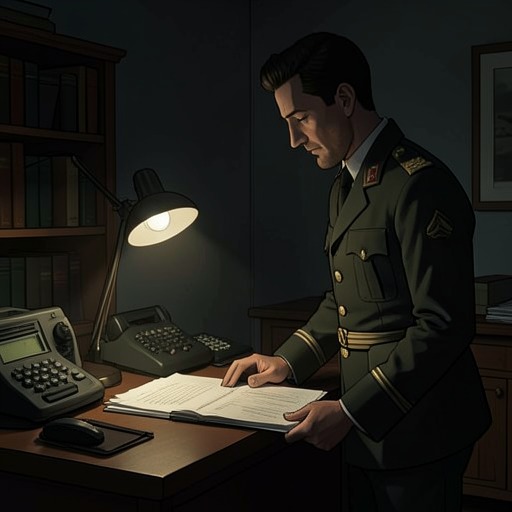
Picquart’s confrontation with the General Staff began as a dispute over what the evidence could sustain. When he first presented his investigation of Charles Ferdinand Walsin Esterhazy to Charles-Arthur Gonse, Chief of Intelligence, he laid out the Petit bleu, surveillance photographs, other documents, and the secret file. He softened one detail, presenting the telegram as having arrived in late April rather than early March, in an effort to make the presentation seem less insulting. But his conclusion was direct: the file did not establish Alfred Dreyfus’s guilt beyond doubt and, he argued, would not survive even a brief, competent cross-examination. The significance of that meeting was not simply that Picquart had found another suspect. He was telling a superior that the material supporting the existing conviction could not bear scrutiny.
Gonse proposed separating the two questions. Picquart could investigate Esterhazy, he said, but must leave the Bordereau out of the inquiry. That distinction would allow the military to pursue a new lead without openly revisiting the evidence on which Dreyfus had been condemned. Picquart’s investigation, however, made the connection between the questions unavoidable: testing Esterhazy’s role also meant confronting the basis of Dreyfus’s conviction.
In a later conversation, Gonse acknowledged that the original investigation had not been handled professionally, citing Jean Sandherr’s illness and the conduct of Armand du Paty de Clam. Yet he argued that reopening the case would renew old wounds, intensify the press controversy, and tear the country apart. His appeal to Picquart was for closure rather than a new examination. The exchange exposed the difference between recognizing defects in the original process and accepting the consequences of correcting them: Gonse could concede the former while resisting the latter.
The disagreement hardened into an explicit order. Gonse invoked the military chain of command, running from the Minister of War through the Chief of Staff to himself and then to Picquart, and forbade Picquart from investigating anything connected with the case or disclosing information to unauthorized people. Picquart left without replying. The order made obedience itself the immediate test of his position, while the investigation had already made silence consequential.
Removal and punishment
The pressure was also expressed through control of information inside the department. When Picquart handed Gonse the file marked D, Gonse asked whether everything was there, then announced that Major Henry would henceforth bring all the Agent Auguste material directly to him. Picquart objected that this was the department’s most important source. The reassignment placed a significant intelligence channel under Gonse’s direct control and removed it from Picquart’s handling as he faced an impending tour of inspection. It was an administrative change, but in the context of their dispute it also narrowed Picquart’s access to information and reduced his authority.
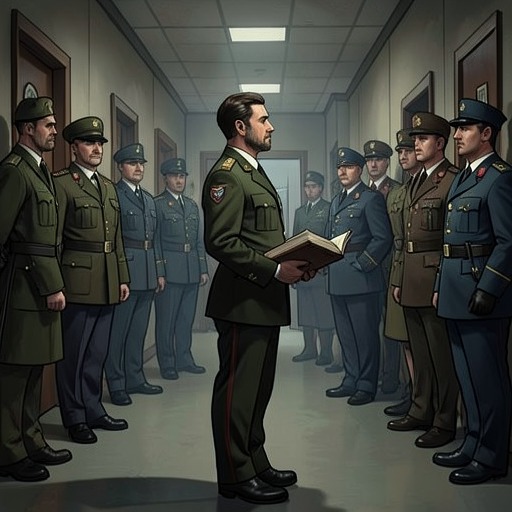
Three days after the sentencing of Émile Zola and the manager of L’Aurore, the commandant at Mont-Valérien informed Picquart that a panel of senior officers had found him guilty of grave misconduct and dismissed him from the army forthwith. The decision denied him the full pension of a retired colonel and left him with the pension of a major: thirty francs a week. It also carried a warning that further public comments about his service on the General Staff would bring the army’s severest possible action. The penalty therefore reached beyond his appointment. It diminished his income and attempted to restrict what he could say about the institution whose conduct he had challenged.
The dismissal was delivered as a brief military procedure. Asked whether he had anything to say, Picquart answered that he did not; the commandant dismissed him. At dusk, carrying a suitcase, he was escorted to the gate and left on the cobbled forecourt to make his own way home. He walked down the hill to the railway station as Monsieur Picquart, no longer an officer. The scene makes the change in status concrete: the army that had structured his entire adult life converted his departure into a matter of command, a small pension, and a solitary journey away from the post.
The dismissed officer and the duel
His new status immediately became an argument used against his claims to military honor. The day after Henry’s death, two colonels, Parès and Boissonnet, visited Picquart and said that Henry would not fight him because a cashiered officer was disreputable and had no honor to lose. They proposed instead that he seek satisfaction from Charles Ferdinand Walsin Esterhazy, who was reportedly eager to challenge him. Picquart rejected that substitution. His challenge to Henry, he maintained, had been made when he was still a serving officer, in response to Henry’s public accusation that he was a liar; he would not descend to a duel with a traitor and embezzler. The episode shows how dismissal could be used to deny him standing even in a dispute that had begun before he was cashiered. Picquart’s answer insisted on the sequence of events: his later loss of rank could not retroactively cancel the circumstances in which he had issued the challenge.
Release without an immediate return to service
Picquart’s imprisonment ended on the same Friday that Alfred Dreyfus was disembarked from Devil’s Island and began the voyage back to France aboard the warship Sfax. In light of the French Supreme Court of Appeal ruling, all charges against Picquart were dropped. Edmond was waiting outside the prison with a motor car to take him to Ville-d’Avray, while journalists gathered and Picquart refused to speak to them. His release thus came alongside a major reversal in the case, but the evidence establishes the dropping of charges and his release, not a restoration of his military career at that moment.
The dismissal remains distinct from the criminal proceedings that ended with his release. The army had expelled him, reduced his pension, and threatened further action over public comment; the later judicial change removed the charges that had kept him in prison. These outcomes reveal two different forms of institutional power at work in his story: a legal case could be halted by a court ruling, while the military’s earlier severance of his professional status remained a separate loss. The contrast gives the dismissal its lasting significance: Picquart’s effort to expose defects in the Dreyfus case cost him not only freedom for a time, but also the career and official standing that had defined his life since youth.